
Concept register · Concept 49 of 64 · Theme: agent evals Reviewed 2026-09-01
assay · concepts · agent-evals
Production outcome evals
Evaluation is moving off the pre-launch checkpoint and onto live traffic, where it runs continuously and drives change rather than producing a score. Three shapes recur — always-on outcome evals, shadow mode, and causal in-the-wild evaluation — and success is measured by what changed because of the evals, not by the headline pass rate.
established · assay: pre-merge, once
10 independent sources · sighted at the Agentic AI Summit 2026 · last reviewed 2026-09-01
§1What it is
Three shapes
Always-on outcome evals: rubric-comparing judge agents scoring real outcomes post-merge, with no engineer in the loop. Shadow mode: agent and human work the same live queue in parallel, and every disagreement is both the measurement and the training signal. Causal in-the-wild evaluation: randomize model, orchestrator or tool assignment across real user sessions, so a leaderboard position is a treatment effect with a confidence interval rather than a static score waiting to be overfit.
A causally linked stack
The layer that ties these together runs from business outcome down to diagnostics — L0 outcomes, L1 black-box task success, L2 component evals, L3 diagnostics. Its named anti-pattern is hill-climbing L2 and L3 while L1 stays flat, which is what happens when the levels are not causally linked. L0 is resolution rate, cost per ticket, analyst hours saved; L1 is whether the refund was the correct amount.
Measured by what changed
Run as a standing engine rather than a gate, the whole thing is an improvement loop: traces in, failures auto-categorized, updates proposed to both the agent and the eval suite, humans accept or reject. The reporting question shifts with it — not “is your eval above 90%” but what did you change because of it, and how stale is the dataset that produced the number.
§2Sightings
Agentic AI Summit 2026 · 10 sightings
 #129Zero Ops: Agents Operate, Humans GovernShamir Abdul Aziz, Microsoft
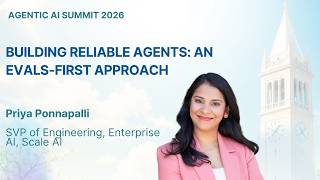 #112Building Reliable Agents: An Evals First ApproachPriya Ponnapalli, Scale AI
 #110Agent Arena: Causal Evaluations of Agents in the Real WorldAnastasios N Angelopoulos, Arena
 #105The Rate Limiter on AI Adoption Is OrganizationalSunita Verma, Ironclad
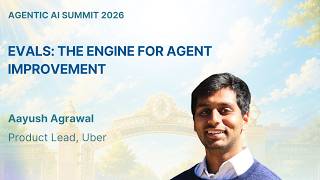 #150Evals: The Engine for Agent ImprovementAayush Agrawal, Uber
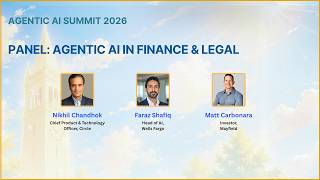 #043Panel: Agentic AI in Finance & LegalChandhok, Circle; Shafiq, Wells Fargo
 #144From Training to Evaluation: Open Recipes for Agentic AIChenguang Wang, UCSC / Scale AI
 #143Looping for Model OptimizationJohn Liu, AWS Trainium
 #091Building Frontier Inference and Training Infra for AgentsBanghua Zhu, SGLang
 #152How Better Evals Can Bring AbundanceScott Clark, Distributional
Also: Azure SRE agent fleet; Arena.
§3Where Assay stands
Pre-merge, and once
Assay’s verify rows run before a merge and run once. That is the honest position: every mechanism above is an evolution beyond where Assay sits today. What is shipped is the piece Microsoft names — the agent validates its own outcome and presents the evidence before a human reviews, rather than the human reading the diff — and the claim-plus-evidence release gate is the same instinct applied to merges (lifecycle). What is not built is anything always-on: no post-merge standing evaluation, no judge agent scoring live outcomes, and no re-run of a brief’s verify rows after the world moves under them.
The structural gap is L0
Assay’s verify rows live almost entirely at L1 and L2 — did this brief’s deliverable work — with nothing tying a landed brief back to whether a higher-level outcome improved. That absence is precisely why the recurring reports count activity. The concrete steal is an L0 line per brief naming the outcome metric that should move; it would be a schema change to the brief format, and it has not been proposed.
What corroborates, and what does not port
The eval-design-review-before-build gate is the same shape as the review gate a brief passes before it is authored — arrived at independently, which is worth recording as corroboration rather than as a gap. Randomized causal evaluation needs traffic volume a single-team methodology does not have, but the discipline of defining the estimand before counting does port, and it is the standard any future “measure desk quality from outcomes” work should be held to. Shadow mode — agent proposes, human does, the diff feeds learning — is a complementary loop to the unbuilt transcript-mining pass, and Uber’s traces → categorized failures → proposed updates → human accept/reject is effectively that pass in production, with useful evidence that the accept/reject gate is the right terminus rather than a compromise.
§4Watch
- Whether always-on post-merge evaluation shows up outside large platform teams — Uber, Microsoft and Ironclad all run dedicated agent-platform orgs, and a small-team version would make it adoptable.
- Published dataset-staleness practice: “a five-month-old dataset is a liability” is the only number the field has offered on eval decay.
- Any account of an L0 metric actually attributed to agent work — the stack is well described, the attribution is not.