
Concept register · Concept 02 of 64 · Theme: context is the new code Reviewed 2026-09-01
assay · concepts · context-is-the-new-code
Context as the moat
Models are converging and swappable; the durable asset is everything around them. Practitioners a year or more into running agent programs give near-identical inventories of what compounds — the eval suite, the captured context, the skills and tools, the production telemetry, the knowledge of how this organization really works — and note that none of it can be bought from a vendor.
established · assay: the core bet
7 independent sources · sighted at DevCon London 2026 and the Agentic AI Summit 2026 · last reviewed 2026-09-01
§1What it is
The repository is the largest context document you own
Code, configs, architecture decision records and docs are all prompt material. That makes architectural legibility and stack uniformity attention-efficiency measures rather than aesthetic preferences: six observability stacks in one repository means the model burns attention working out which one is canonical.
Tribal knowledge is invisible, by construction
A 2022 chat thread, an undocumented infrastructure module, a convention everyone senior simply knows — none of it exists as far as an agent is concerned. The response is a checked-in system of record: skills, context, recipes, decision records, so agents understand the system before they change it. The goal is not better documentation; it is agents that can operate safely.
The failure this predicts has a name
When the binding constraint lives outside the repository — a design system, a cost decision, a product ruling made in chat — every in-harness gate reports green and the result is still wrong. An agent handed a design file used a generic component instead of the design system’s export, which encodes accessibility and async behaviour; ticket, PR and skill evals were all green, and the failure surfaced downstream as a failed accessibility audit.
§2Sightings
DevCon London 2026 · 3 sightings
 #33Harness Engineering: How to Build Software When Humans Steer and Agents ExecuteRyan Lopopolo, OpenAI
 #38Built for Humans. Now Agents Are Here.Dana Lawson, Netlify
 #14Harness Engineering Beyond CodeMarc Sloan, Tessl
Agentic AI Summit 2026 · 5 sightings
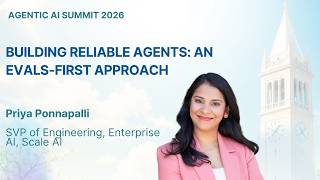 #112Building Reliable Agents: An Evals First ApproachPriya Ponnapalli, Scale AI
 #129Zero Ops: Agents Operate, Humans GovernShamir Abdul Aziz, Microsoft
 #107The Enterprise Version of the One-Person UnicornRene Pajta, Microsoft
 #105The Rate Limiter on AI Adoption Is OrganizationalSunita Verma, Ironclad
 #102Intelligence + Continual Learning = ExpertiseYu Su, Ohio State
Also: Figma Code Connect and the Figma MCP server; Linear; Notion; Granola.
§3Where Assay stands
This is the bet Assay is built on
The brief format, the registers, the role skills, the findings corpus and the accumulated guardrail history are precisely the “not the model” investment — built on the wager that harnesses and models turn over and the context does not. Netlify’s framing is a sharper mission statement than Assay’s own docs: not better documentation, but agents that can operate safely.
The split between what is published and what is not
Assay ships the methodology as an open, installable layer and keeps the operator’s own material — the trust roster, the findings, the accumulated rulings, the rationale behind each guardrail — on the operator’s side. Read against this evidence, that is this concept restated from the buyer’s side: the published bundle is deliberately the commodity layer, and the part that cannot be bought is the part that stays local. A defensible position, not an accident of what happened to be ready to publish.
The harness-blind defect class applies here too
A ruling or a priority that lives in a session channel rather than in an issue, a brief or a findings entry is exactly the out-of-repo constraint that turns every green gate into a false negative. Two mechanisms are designed and unbuilt: a field on a brief naming the out-of-repo artifacts it depends on, and a dispatch gate that refuses to claim a brief whose linked rulings are still provisional or open. The expert-usage crawl — mining which files an expert opens, in what order, for which class of work — is a mechanism the dreaming pass does not have and could copy. And “chat is for exceptions, and resolved exceptions become new signals” is the findings lifecycle described from outside.
§4Watch
- Whether anyone measures the moat rather than asserting it: a same-suite model swap with quality held constant would be the first hard number behind “evals are the durable asset”.
- Whether harness vendors ship a way to version out-of-repo context (design systems, product docs) so evals stop rotting silently against third-party state.
- Whether the expert-usage-crawl pattern appears anywhere outside Microsoft — it is the only mechanism in this scan for capturing know-how nobody wrote down.